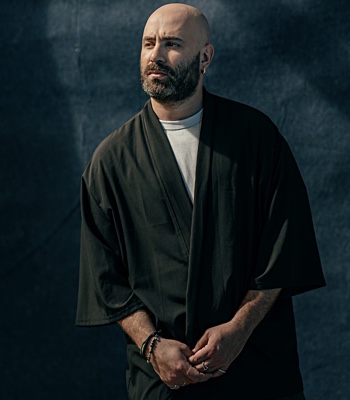
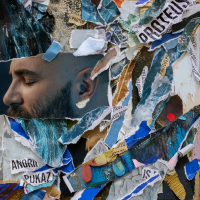
Written and recorded in 2020 during global lockdown, SUBA (dawn in Malinke) is a hymn to hope, to a new era of compassion and real change in a post-pandemic world, and a visceral reiteration of the eternal prayer of humanity for peace and world unity.The Atlantic Ocean separates Cuba from Senegal, the respective birthplaces of Omar Sosa and Seckou Keita, a distance diminished by their common ancestral bond with Africa. When the two first met in 2012, Seckou loved Omar for his musical spirituality, while Omar saw in Seckou a rare ability to collaborate without losing his identity.Omar has released more than 30 albums during an impressive career, which has included nominations for seven Grammy and Latin Grammy Awards. Seckou is also the recipient of several awards, the most recent being the prestigious BBC Radio 2 Folk Musician of the Year (2019).On the SUBA album, Omar and Seckou invite the inimitable Venezuelan percussionist Gustavo Ovalles, who also accompanies them on stage. On the record, we also find Jaques Morelenbaum (cello), Dramane Dembélé (flute) and Steve Argüelles (sequencing, effects, percussions).SUBA means "dawn" in Malinké, Seckou's mother tongue. Sunrise is her favorite time of day, it's a time of freshness and hope. “Even if you are faced with certain difficulties, you are resetting your brain. You see the sunrise as a new day, a new peace, a new thing, good or bad. Something exciting. This is the feeling I had when I wrote with Omar. "And although Seckou calls the pandemic "a top university for seeing the world in a different way," it wasn't because of COVID that he and Omar decided on the name. "It was SUBA for a lot of things: music, art, people, compassion, change." As Omar says, “The concept of the record is based on peace, hope and unity. In this time that we are living, as everything is slowly falling apart, the only thing we have is a divine connection with our inner voice, with our spirit, with our light and with our ancestors. We try to give hope through music and tell people that we can be together. "Two fundamental principles guided the design of the album: the less is more or minimalismo approach as Omar likes to call it and the importance of collaboration. "The project is Africa," says Omar, "made our way. We present our own traditions, but we respect and always listen to each other, with great humility. No one is the boss. The boss is the music. The boss is the message. ""The only thing Africa can teach the world is spirituality in everything," says Omar. “We are often slaves to our crazy and humiliating society, in which everyone has to be 'successful'. "The eleven tracks that make up SUBA are linked by common themes, woven throughout the recording. The songs are about friendship and spiritual connection, travel and loss, hope and optimism, dance and sea… and, of course, a new sunrise....
read more
Written and recorded in 2020 during global lockdown, SUBA (dawn in Malinke) is a hymn to hope, to a new era of compassion and real change in a post-pandemic world, and a visceral reiteration of the eternal prayer of humanity for peace and world unity.The Atlantic Ocean separates Cuba from Senegal, the respective birthplaces of Omar Sosa and Seckou Keita, a distance diminished by their common ancestral bond with Africa. When the two first met in 2012, Seckou loved Omar for his musical spirituality, while Omar saw in Seckou a rare ability to collaborate without losing his identity.Omar has released more than 30 albums during an impressive career, which has included nominations for seven Grammy and Latin Grammy Awards. Seckou is also the recipient of several awards, the most recent being the prestigious BBC Radio 2 Folk Musician of the Year (2019).On the SUBA album, Omar and Seckou invite the inimitable Venezuelan percussionist Gustavo Ovalles, who also accompanies them on stage. On the record, we also find Jaques Morelenbaum (cello), Dramane Dembélé (flute) and Steve Argüelles (sequencing, effects, percussions).SUBA means "dawn" in Malinké, Seckou's mother tongue. Sunrise is her favorite time of day, it's a time of freshness and hope. “Even if you are faced with certain difficulties, you are resetting your brain. You see the sunrise as a new day, a new peace, a new thing, good or bad. Something exciting. This is the feeling I had when I wrote with Omar. "And although Seckou calls the pandemic "a top university for seeing the world in a different way," it wasn't because of COVID that he and Omar decided on the name. "It was SUBA for a lot of things: music, art, people, compassion, change." As Omar says, “The concept of the record is based on peace, hope and unity. In this time that we are living, as everything is slowly falling apart, the only thing we have is a divine connection with our inner voice, with our spirit, with our light and with our ancestors. We try to give hope through music and tell people that we can be together. "Two fundamental principles guided the design of the album: the less is more or minimalismo approach as Omar likes to call it and the importance of collaboration. "The project is Africa," says Omar, "made our way. We present our own traditions, but we respect and always listen to each other, with great humility. No one is the boss. The boss is the music. The boss is the message. ""The only thing Africa can teach the world is spirituality in everything," says Omar. “We are often slaves to our crazy and humiliating society, in which everyone has to be 'successful'. "The eleven tracks that make up SUBA are linked by common themes, woven throughout the recording. The songs are about friendship and spiritual connection, travel and loss, hope and optimism, dance and sea… and, of course, a new sunrise.
Écrit et enregistré en 2020 pendant le confinement mondial, SUBA (l’aube en malinké) est un hymne à l’espoir, à une nouvelle ère de compassion et de changement réel dans un monde post-pandémique, et une réitération viscérale de l’éternelle prière de l’humanité pour la paix et l’unité mondiale.L’océan Atlantique sépare Cuba du Sénégal, les lieux de naissance respectifs d’Omar Sosa et de Seckou Keita, une distance amenuisée par leur lien ancestral commun avec l’Afrique. Lorsque les deux hommes se sont rencontrés pour la première fois en 2012, Seckou aimait Omar pour sa spiritualité musicale, tandis qu’Omar voyait en Seckou une capacité rare à collaborer sans perdre son identité.Omar a sorti plus de 30 albums au cours d’une impressionnante carrière, qui a comporté des nominations pour sept Grammy et Latin Grammy Awards. Seckou est également lauréat de plusieurs prix, le plus récent étant le prestigieux BBC Radio 2 Folk Musician of the Year (2019).Sur l’album SUBA, Omar et Seckou invitent l’inimitable percussionniste vénézuélien Gustavo Ovalles, qui les accompagne aussi sur scène. Sur le disque, nous retrouvons également Jaques Morelenbaum (violoncelle), Dramane Dembélé (flûte) et Steve Argüelles (sequencing, effets, percussions).SUBA signifie « l’aube » en malinké, la langue maternelle de Seckou. Le lever du soleil est son moment préféré de la journée, c’est un moment de fraîcheur et d’espoir. « Même si vous êtes confrontés à certaines difficultés, vous remettez votre cerveau à zéro. Vous voyez le lever du soleil comme un nouveau jour, une nouvelle paix, une nouvelle chose, bonne ou mauvaise. Quelque chose d’excitant. C’est le sentiment que j’ai eu lorsque j’écrivais avec Omar. »Et bien que Seckou appelle la pandémie « une université de haut niveau pour voir le monde d’une manière différente », ce n’est pas à cause du COVID que lui et Omar ont décidé du nom. « C’était SUBA pour beaucoup de choses : la musique, l’art, les êtres humains, la compassion, le changement ».Comme dit Omar : « Le concept du disque repose sur la paix, l’espoir et l’unité. Dans la période que nous vivons, alors que tout s’écroule petit à petit, la seule chose que nous avons est une connexion divine avec notre voix intérieure, avec notre esprit, notre lumière et nos ancêtres. Nous essayons de donner de l’espoir à travers la musique et de dire aux gens que nous pouvons être ensemble. »Deux principes fondamentaux ont guidé la conception de l’album : l’approche less is more ou minimalismo comme Omar aime l’appeler et l’importance de la collaboration. « Le projet, c’est l’Afrique, dit Omar, faite à notre façon. Nous présentons nos propres traditions, mais nous nous respectons et nous nous écoutons toujours l’un et l’autre, avec beaucoup d’humilité. Personne n’est le patron. Le patron, c’est la musique. Le patron, c’est le message. »« La seule chose que l’Afrique peut enseigner au monde, c’est la spiritualité dans chaque chose », dit Omar. « Nous sommes souvent esclaves de notre société folle et humiliante, dans laquelle tout le monde doit avoir du « succès ». »Les onze titres qui composent SUBA sont liés par des thèmes communs, tissés tout au long de l’enregistrement. Les chansons parlent d’amitié et de connexion spirituelle, de voyage et de perte, d’espoir et d’optimisme, de danse et de mer… et, bien sûr, d’un nouveau lever de soleil.
show less